


When a cluster of UAP sightings near India's southeast coast made international headlines in early 2024 — picked up by the Daily Mail and widely circulated — the two names most associated with the story were Sabir Hussain, the Chennai-based researcher who brought it to media attention, and Police Sub-Inspector Syed Abdul Kader, who filmed unexplained aerial phenomena near the Kudankulam nuclear facility over multiple nights in August 2023.
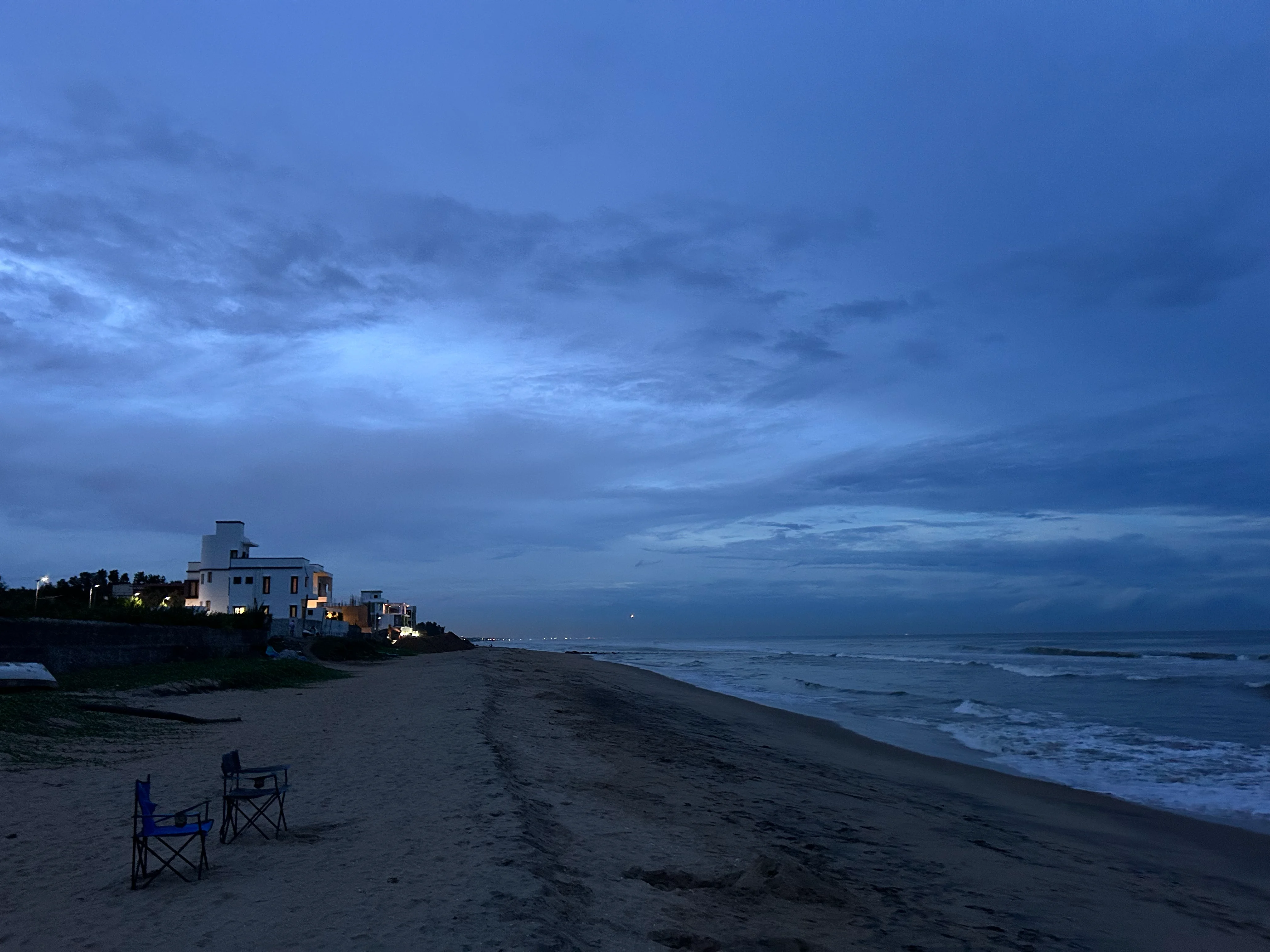
Less examined was an earlier incident. On July 26, 2023 — ten days before Kader's sightings began — a retired Director General of Police named Prateep V. Philip photographed an unexplained object over the sea near Muttukadu beach, south of Chennai. The image circulated briefly in the Indian press and was mentioned in passing in international coverage. Philip himself was never the subject of a dedicated interview.
Philip served 34 years in India's elite Indian Police Service, rising through Tamil Nadu's law enforcement hierarchy to hold the rank of Director General of Police — the highest attainable position in the state force. He served as Commissioner of Police, as Additional Director General across multiple divisions including Economic Offences, Crime, and Intelligence, and retired in 2021 as Director of Tamil Nadu Police Academy. He is also a published author, the founder of the internationally recognized Friends of Police community policing movement, and holds a PhD. He had no prior interest in UAP.
The UAP Observer spoke with Dr. Philip in a written exchange conducted in March 2026. The following are his account, lightly edited for clarity.
Q: Can you take us back to July 26, 2023 at Muttukadu beach? What exactly did you and your wife observe, and what was your immediate reaction?
A: "On the evening of July 26, 2023, my wife and I were at Muttukadu beach along the East Coast Road near Chennai. It was around dusk, and the sky was relatively clear.
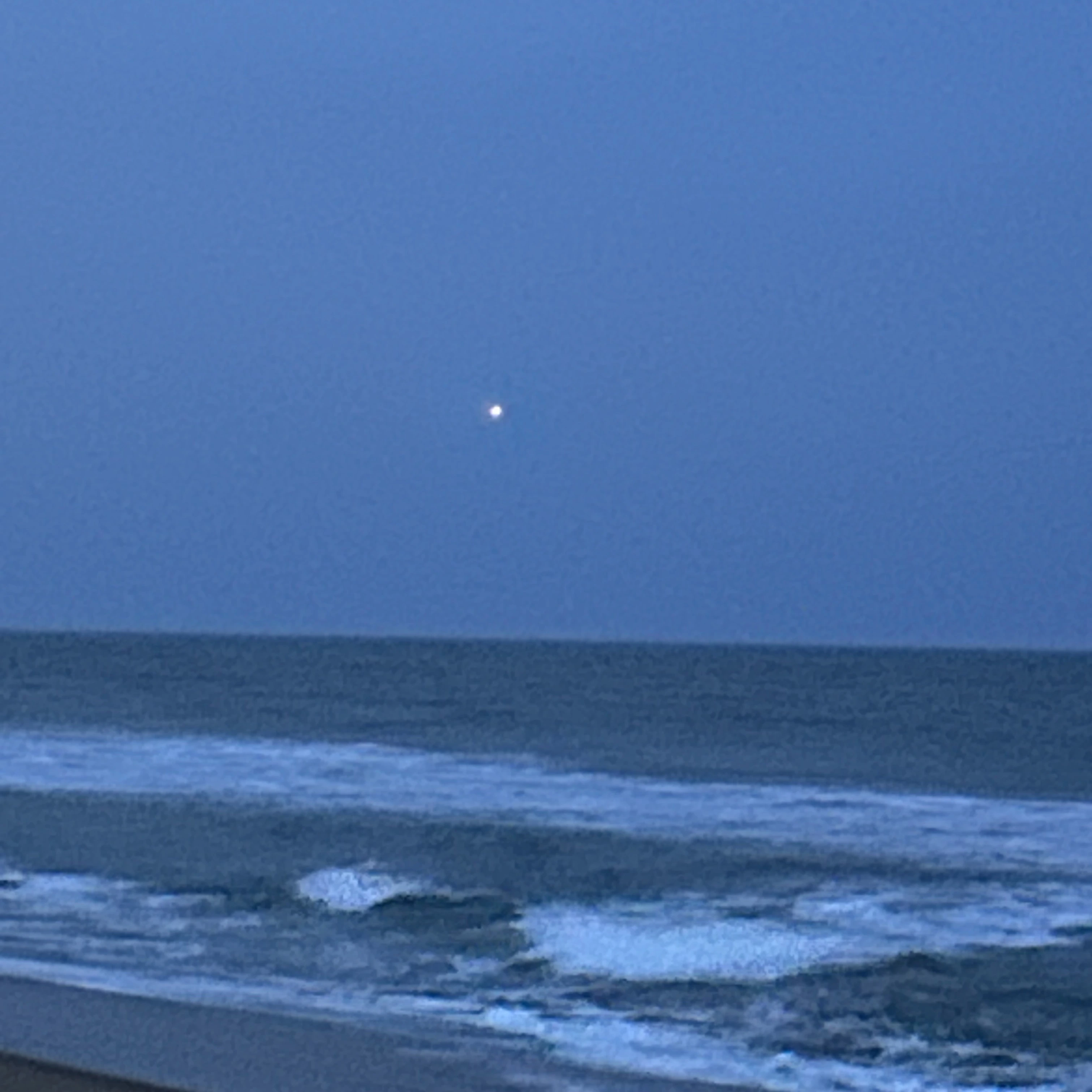
We noticed a bright, stationary light over the horizon. What caught our attention was its unusual steadiness — it did not exhibit the typical blinking or movement patterns associated with aircraft, nor did it resemble a star or planet in intensity or position.
Our immediate reaction was curiosity rather than alarm. Given my professional background, I tend to observe first, interpret later. I watched it carefully for a few moments before deciding to photograph it."
Q: During the 20–25 seconds you observed the objects, did they appear to move at all, or were they entirely stationary?
A: "During the several minutes of observation, the objects did not exhibit any noticeable movement. They appeared completely stationary relative to our line of sight, maintaining a fixed position without any discernible shift, drift, or change in formation. We also noticed a similar light away from where they were originally sighted, at ninety degrees diametrically opposite us over the sea. A photo taken of that, when zoomed, showed two flying objects similar to the four in the earlier photograph."
Q: You took the photo with your iPhone 14 — to the naked eye it appeared as a single light, but when you zoomed in you saw four objects. Can you describe that moment? What did you make of it?
A: "To the naked eye, the object appeared as a single luminous point. However, when I used my iPhone 14 to zoom in and later reviewed the image, I noticed what appeared to be four distinct objects clustered together.
That was the moment the sighting became more intriguing. The formation appeared structured rather than random. My initial thought was that this required further examination, but I refrained from jumping to conclusions.
As someone trained in investigation, I am cautious about interpreting visual data without corroboration. The photograph raised questions — it did not answer them."
Q: How exactly did they disappear — did they fade gradually, switch off suddenly, accelerate away, or simply drift out of sight?
A: "Their disappearance was quite unusual. There was no visible acceleration or directional movement away from the scene. Instead, they seemed to fade out gradually, almost as though their luminosity diminished until they were no longer visible, rather than physically departing from the field of view.
Even a day later, a similar light was seen hovering over the sea diametrically opposite our beach and balcony."
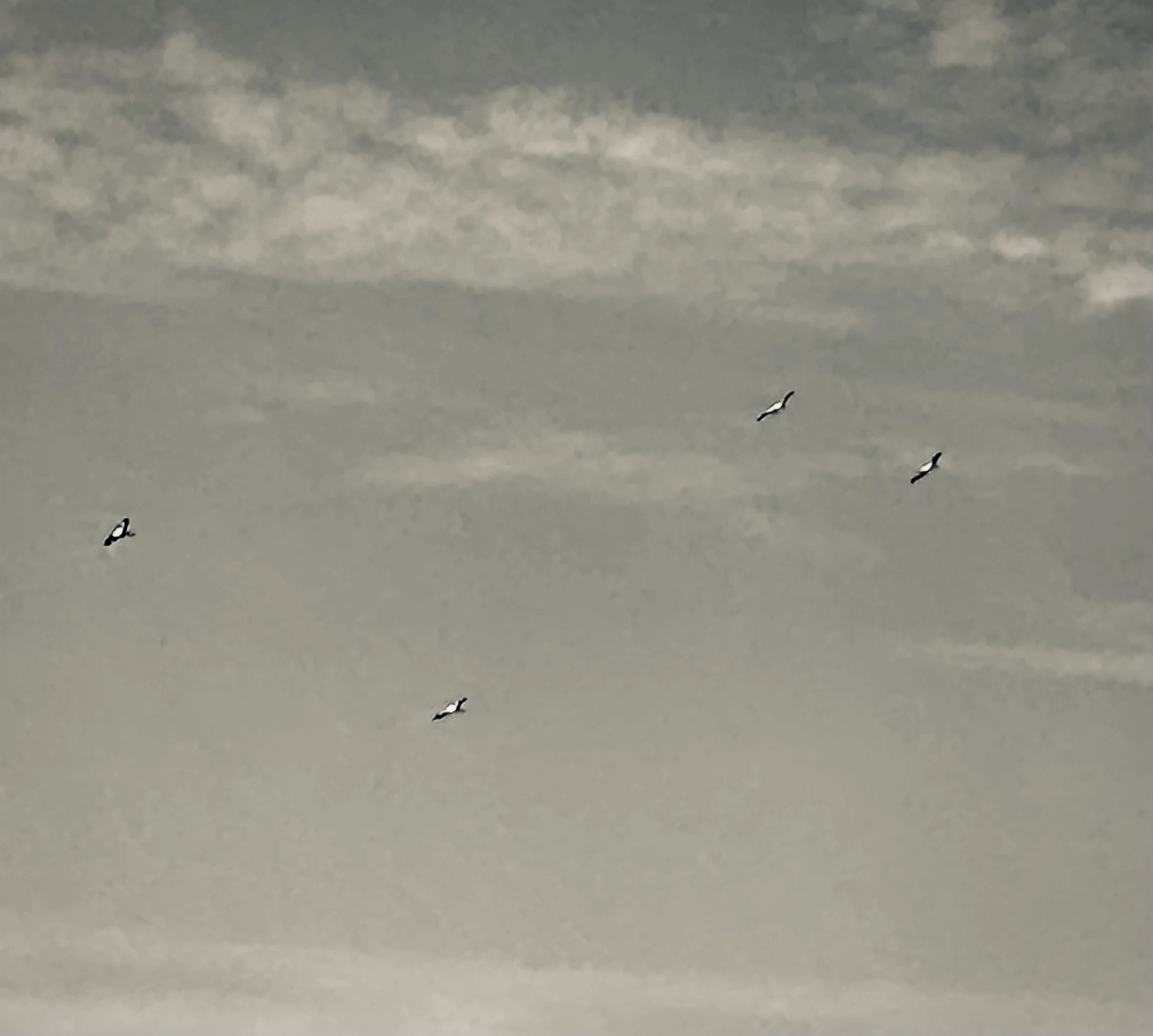
Q: After the photo circulated, photographer Raj Rajshekaran processed it using AI super-resolution tools, producing the enhanced images that spread widely in the media. Some skeptics looked at those AI-processed images and suggested the objects could be large birds. How do you respond to that, and do you feel the AI enhancement accurately represents what you originally captured?
A: "The suggestion that the objects could be large birds is a plausible hypothesis and should [not] be dismissed outright. However, from my direct observation, the light appeared unusually bright and steady for birds at that distance and time of day. From our high-rise apartment balcony in the same area I have often sighted large crane-like birds flying as a flock, and attempts to photograph these even from just 500 to 700 feet have captured only blurred, small-sized images. At thirty to fifty kilometers distance, they would not be visible to the naked eye or be captured in any photograph.
The social media influencer with millions of followers who made the claim that they could be large birds neither contacted me [nor] interviewed me — so much for their credibility and zeal to investigate facts.
At this stage, I remain open to multiple explanations. The key point is that the original observation remains unexplained — not necessarily unexplainable."
Q: Your sighting took place roughly 30km from the Kalpakkam nuclear power plant, and just 10 days later SI Syed Abdul Kader began reporting similar sightings near Kudankulam further south. When you learned about his sightings, what did you make of the timing and the pattern?
A: "The geographical context is certainly noteworthy. Muttukadu is approximately 30 kilometers from the Kalpakkam nuclear facility, and the subsequent sightings reported by SI Syed Abdul Kader near Kudankulam add an interesting dimension.
However, correlation should not be mistaken for causation. The timing and proximity may be coincidental, or they may indicate a pattern that warrants systematic study.
My view is that such incidents, when they occur in clusters or near sensitive installations, deserve structured documentation and analysis rather than speculation."
Q: Did any official body — police, military or government — ever follow up with you about your sighting?
A: "No official agency — police, military, or government — contacted me regarding this sighting. This, in itself, highlights a gap. Incidents of this nature, even if ultimately explained as natural or man-made phenomena, should ideally be logged and examined through a formal mechanism."
Q: You served for 34 years in the Indian Police Service — a career built on evaluating evidence and witness credibility. During that time, did you ever encounter any other unexplained aerial incidents or sightings reported by officers or witnesses that stuck with you?
A: "A few months before [the] above sighting, from our high-rise balcony that has a clear view of the entire coast across 180-plus degrees, [I] did see one evening a large ivory-coloured craft cruising towards the south. Then I saw a smaller craft emerging at ninety degrees from the mother craft and moving to the left. I tried to take a photo but no image appeared.
During my 34-year career in the Indian Police Service, I encountered numerous cases where initial appearances were misleading. I did not personally investigate any aerial phenomena that remained conclusively unexplained. That said, I have come across anecdotal accounts from officers and civilians describing unusual lights or aerial movements. Most were eventually attributed to known causes — astronomical objects, drones, or atmospheric effects.
The lesson from policing is simple: absence of explanation at a given time does not imply absence of explanation altogether. It simply means the inquiry is incomplete."
Q: India currently has no formal mechanism for investigating UAP incidents. As someone who spent a career building institutional frameworks for public safety — what would you want to see the Indian government do?
A: "India would benefit from a structured, multi-agency framework to document and analyze UAP. Such a framework could include a standardized reporting protocol for civilians, pilots, and law enforcement; a central database for sightings; scientific analysis involving ISRO, DRDO, and meteorological departments; and periodic public reports to ensure transparency and avoid misinformation.
The objective should not be to sensationalize but to systematize. Even if 99 percent of cases have conventional explanations, the discipline of investigation strengthens institutional credibility."
Philip also volunteered one further detail. The date of his sighting — July 26, 2023 — was the same day that former intelligence officer David Grusch, Navy pilot Ryan Graves, and former F/A-18 pilot David Fravor testified before a U.S. House Oversight subcommittee in what became one of the most widely covered UAP hearings in congressional history. A veteran UAP researcher from the United States who reviewed Philip's photograph noted the coincidence, suggesting the objects appeared to be "making a public statement on the date of the Congressional public hearing — before a credible witness — that they are globally present and not just in the USA." Whether that interpretation has merit is a matter for the reader to judge.
As a final note, Philip mentioned that the experience has stayed with him. Triggered by the sightings, he has since written a science fiction film screenplay titled The Crimson Orbit.
Dr. Prateep V. Philip served in the Indian Police Service (Tamil Nadu cadre) from 1987 to 2021. He is the founder of the Friends of Police movement and the author of Fillipisms: 3333 Maxims to Maximise Your Life. He can be found at prateepphilip.com and friendsofpolice.net.