

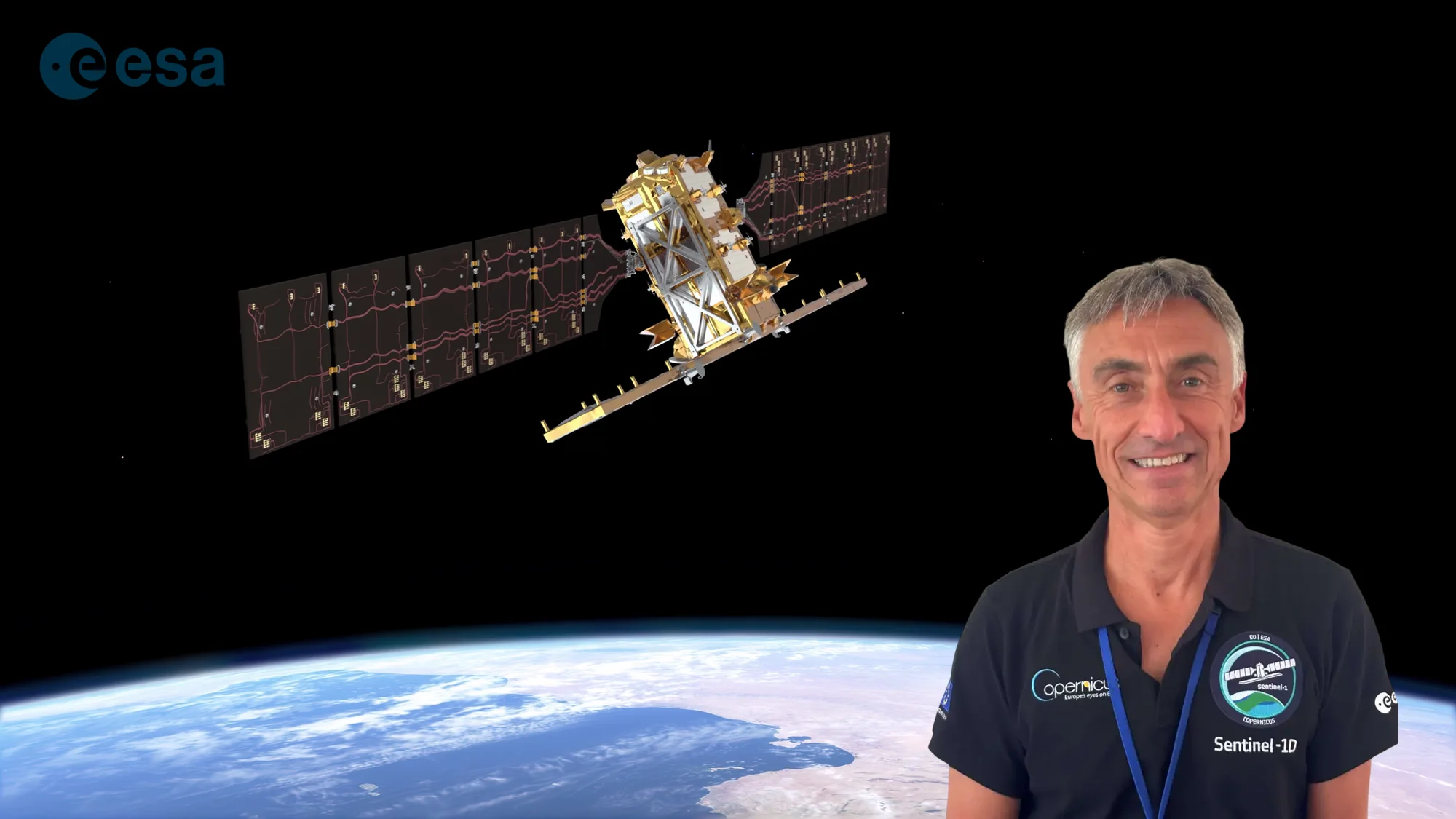

In late 2025, the European Space Agency (ESA) identified an internal contact point for UAP-related inquiries, reflecting a growing interest in understanding such observations within a scientific context. This role is held by Philippe Ailleris, Senior Project Controller at ESA's Space Research and Technology Centre (ESTEC) in the Netherlands.
ESA was founded in 1975 and today represents 23 member states. Its mandate is strictly civilian and scientific, with no defense or intelligence role. Ailleris works within ESA's Earth observation directorate on the Copernicus programme, the EU's flagship Earth-monitoring initiative run jointly by the European Commission and ESA.
Copernicus has been operational since 2014 and is built around a family of dedicated satellites called the Sentinels. Sentinel-1 is a radar constellation and one of the missions Ailleris works on. Its synthetic aperture radar operates independently of daylight and weather conditions. The reflected microwave signals are used to create detailed surface images for disaster response, maritime surveillance, ground deformation monitoring, and other purposes. Sentinel-2 followed in 2015. It captures high-resolution optical imagery across multiple spectral bands covering vegetation, soil, water, and coastal areas, with a global revisit time of just a few days. Ailleris also works on CO2M, an upcoming expansion mission designed to track human-caused CO₂ and methane emissions from orbit, with the first satellite expected to launch around 2027.
Ailleris' interest in UAP predates his career at ESA. He traces it back to 1977, when CNES established GEIPAN, France's official UAP investigation bureau and still one of the most rigorous national programs of its kind. Over the years he contributed to several initiatives, including the UAP Observations Reporting Scheme (2009) and the UFODATA Project (2015), aimed at building a global network of automated UAP monitoring stations.
He is also a member of EuroUFO, a virtual community of scientifically oriented European researchers. In this context, he compiles the annual EuroUFO Barometer, with the most recent edition covering a dataset of more than 33,000 observations across Europe between 2019 and 2024.
In parallel, he has authored and contributed to several recent publications, including "Exploring Unidentified Aerospace Phenomena through Instrumented Field Studies: Historical Insights, Current Challenges and Future Directions" (2024) and "The New Science of Unidentified Aerospace-Undersea Phenomena (UAP)" (2025). All of this work is conducted in a personal capacity and is not endorsed by European Space Agency.
This role emerged in the context of broader reflections within European Space Agency following public remarks by Director General Josef Aschbacher in 2025 on the relevance of approaching unusual observations through scientific methods. It also followed informal exchanges with academic institutions such as IFEX (Interdisciplinary Research Center for Extraterrestrial Studies) at the University of Würzburg, and one of the first academic institutions in the world to formally include UAP research in its official research canon.
The following is the unedited interview conducted by The UAP Observer with Ailleris through ESA's communications department.
Q: What does your role as ESA's UAP contact point actually look like in practice? Are you receiving inquiries from the public, researchers, or other institutions? Is there anything that has surprised you so far?
A: "In practice, the role is primarily coordination-oriented. Communication and media officers across ESA's different establishments are aware of this point of contact and may route to me inquiries related to UFO/UAP, whether they come from journalists, citizens, or occasionally other institutions. The aim is to ensure that responses remain consistent, factual, and aligned with ESA's mandate.
The number of requests has actually been quite limited so far. This may appear somewhat surprising given the level of media attention on UAP internationally in recent years. However, it likely reflects the fact that ESA is not generally perceived as an organisation involved in UAP investigations. Most inquiries we receive are relatively low in volume and diverse in nature, ranging from general questions about ESA's position, to public sighting reports, or broader reflections on policy or scientific aspects. Many of these inquiries are also influenced by the way the topic is perceived in the public imagination, where UAP are often associated with extraterrestrial life.
Interestingly, no major requests from broadcast media (e.g. television or radio) have been received to date. Most interactions have remained at the level of written inquiries or specialised outlets. In practice, responses typically consist of providing factual clarification, avoiding speculation, and, when appropriate, referring individuals to national organisations with specific expertise in this field.
If there is one notable development, it is the increased visibility of the topic at the institutional level following the ESA Director General's public remarks in 2025. This marked the first time the subject was addressed openly at that level in ESA leadership, and it contributed to the establishment of a more consistent and coordinated handling of such inquiries.
Overall, the role does not involve the direct investigation of phenomena, but rather aims to ensure clarity, consistency, and scientific rigor in ESA's engagement with a topic that continues to attract public interest."
Q: ESA Director General Aschbacher said in 2025 that ESA "maybe should address (UAP) more strongly." Has that comment led to any internal changes or discussions?
A: "The remarks by the ESA Director in 2025 should be understood in a broader context. They reflected the general idea that unusual observations can be approached through scientific methods and that, as with any topic, careful, evidence-based consideration without a priori assumptions is important, recognising that unexplained observations can also represent opportunities to improve our understanding, including of the broader environment in which we operate.
These comments did not signal a change in the mandate or programme priorities of the European Space Agency, and ESA has not established a dedicated research activity on UAP.
However, in light of the increasing public and media attention to the topic in recent years, ESA has taken steps since last year to ensure that any related inquiries are handled in a consistent and coordinated manner. In particular, an internal point of contact has been established, along with a coordination mechanism to provide clear, factual responses and to maintain awareness of developments in this area.
This approach allows ESA to respond appropriately to public interest while remaining fully aligned with its core mission in space science, Earth observation, and exploration."
Q: You work directly on the Sentinel-1 and CO2M missions. From a technical standpoint, how suitable would Copernicus infrastructure be for incidental UAP detection — and are there institutional barriers to even asking that question inside ESA?
A: "From a technical standpoint, Copernicus satellites such as Sentinel-1 and Sentinel-2 were not designed to detect unidentified aerial phenomena, but they do provide capabilities that can occasionally capture transient or unusual objects incidentally.
Sentinel-2, for example, acquires high-resolution optical and multispectral imagery over land. It offers long-term, calibrated datasets that are extremely valuable for environmental monitoring, but it can also occasionally record moving objects such as aircraft, vessels, or short-lived luminous events under the right conditions. However, its observations depend on daylight, clear skies, and fixed acquisition schedules, which limits its ability to systematically detect transient phenomena.
Sentinel-1, using radar, provides a complementary capability. It operates day and night and is not affected by cloud cover, which makes it particularly powerful for observing surface features and certain types of motion. Radar can reveal physical disturbances or objects that are not visible in optical imagery. That said, interpreting radar data is more complex, and these systems are optimized for Earth surface monitoring rather than tracking aerial objects.
More generally, Earth observation satellites measure physical signals, reflected light, emitted radiation, or radar returns, rather than directly "seeing objects" in the way we might intuitively think. Detecting something unusual therefore depends on whether it produces a measurable signature within the sensor's capabilities, and whether it happens to be in the field of view at the time of acquisition. Short-lived, small, or low-contrast events can easily go undetected.
So, while the Copernicus infrastructure is not a dedicated detection system for UAP, it can provide valuable contextual or supplementary information, especially when combined with other sources such as ground-based sensors or aviation data. In that sense, its strength could lie more in supporting analysis than in primary detection.
On the institutional side, there is no specific barrier to asking these questions, but engagement within a civilian space agency like ESA is guided by mandate and scientific relevance. Activities typically need to align with areas such as Earth observation, atmospheric science, or space monitoring, and often respond to requests from Member States or public authorities.
If, in the future, clear operational needs were identified, for example related to airspace safety or environmental monitoring, or if strong scientific proposals emerged from the research community, or if new, credible and well-documented observations or datasets were to highlight gaps in our current understanding, then it would, in my view, be entirely reasonable to explore how existing capabilities could contribute in a coordinated and transparent manner."
Q: Your December 2025 EuroUFO Barometer now covers 37 countries and over 33,000 reports. What are the most meaningful patterns — and what do the gaps tell us about the state of European UAP research?
A: "The December 2025 EuroUFO Barometer, prepared for EuroUFO, the virtual community of scientifically oriented European UFO researchers, covering around 37–40 European countries and more than 33,000 reported events, reveals several robust structural patterns. Over the six-year reference period, annual totals fluctuate within a relatively narrow range, averaging roughly 5,600 reports per year, indicating a high and stable volume of reporting at the continental scale. This persistence demonstrates not only sustained public engagement, but also that a large proportion of the European population remains often unfamiliar with recognising common natural, aeronautical, and space-related objects in the sky, particularly under unusual viewing conditions.
At the same time, the Barometer confirms that genuinely unexplained cases are extremely rare within well-curated national systems. Across countries with transparent investigation and classification procedures, the overwhelming majority of reports are ultimately resolved as conventional phenomena. This is consistent with official statistics published in France by CNES through GEIPAN (Groupe d'Études et d'Informations sur les Phénomènes Aérospatiaux Non identifiés), where the proportion of unexplained cases (Category D) remains low, typically around 2% of total reports.
Only a very small residual fraction remains officially unexplained after investigation, and even these cases rarely display strong evidential consistency. This clearly shows that high report volumes should not be confused with anomalous prevalence.
A growing share of misidentifications is linked to space activities, reflecting the rapid acceleration of launches and orbital operations in recent years. Satellite constellations such as Starlink, observations of the International Space Station, isolated satellites, rocket launches, booster and satellite re-entries, and space debris now account for an increasing proportion of reported sightings across Europe. In that sense, the expansion of space activities, including those conducted by space agencies and commercial operators, is also contributing to the increase in UAP reports, by introducing a wider range of visually unfamiliar but entirely conventional objects into the sky. These developments have significantly expanded what the public can observe, contributing to elevated reporting levels without implying new categories of phenomena.
The integration of MUFON and NUFORC data in the EuroUFO Barometer, representing the first inclusion in a European dataset of raw UAP reports from two major US-based organisations, substantially improves geographical coverage and confirms that UAP reporting exists across much of Europe, including in countries lacking resident national structures. However, these contributions also highlight a central limitation: institutional capacity, not observational scarcity, remains the primary determinant of data quality. Where stable national organisations exist, data are interpretable and largely demystifying; where they do not, reporting remains fragmented and analytically fragile.
Taken together, the Barometer documents not only reported UAP, but a broader institutional asymmetry. Europe possesses a large and growing observational base, increasingly influenced by space-related activities, yet lacks a harmonised framework to systematically consolidate, classify, and exploit these data at continental scale. Future updates, including the forthcoming 2025 edition, will therefore focus on improved analytical granularity, particularly through hopefully targeted examination of the small subset of cases that remain formally classified as unexplained over multi-year periods."
Q: The IFEX-ESA meeting in June 2025 preceded your appointment by just a few months. How do you see the relationship between space agencies and academic research centres like IFEX developing?
A: "What we are seeing today is that some academic institutions are approaching the UAP topic with increasing scientific rigor, using established methodologies, dedicated instrumentation, and peer-reviewed frameworks. In Europe, centres such as IFEX at the University of Würzburg (Germany) or Linköping University (Sweden), and in the United States initiatives like the Galileo Project at Harvard University or UAPx at the University of Albany, are good examples of this evolution.
From ESA's perspective, our role is not to conduct or lead UAP research. However, as a major space agency, we naturally remain attentive to developments in the scientific and academic landscape, particularly when they intersect with domains such as atmospheric science, space safety, or the use of space-based data. ESA's credibility is built on applying a rigorous, evidence-based approach across all its activities, from planetary science to Earth observation. As an intergovernmental organisation, we also operate within a clearly defined mandate and remain accountable to our Member States. This is why engagement on emerging topics such as UAP must remain carefully framed, ensuring alignment with scientific relevance and institutional responsibilities.
Going forward, the relationship with academic centres is likely to be one of awareness and dialogue rather than direct operational collaboration. Academic research can play an important exploratory role, helping to structure methodologies, improve data collection, and raise scientifically relevant questions. In that sense, one of the key evolutions may be a more interdisciplinary approach, bringing together expertise from atmospheric science, physics, engineering, data science, and perception studies, to better characterise and analyse unusual observations in a structured way.
As the field continues to evolve, it remains relatively open and not yet fully structured, which may, over time, lead to increased coordination and collaboration across institutions at regional and international levels. Such evolution would, however, depend not only on scientific relevance, but also on the interests and priorities of ESA’s Member States and institutional partners.
As an intergovernmental organisation funded by its Member States and stakeholders, ESA operates within a mandate defined through agreed programmes and budget allocations. Any potential engagement would therefore need to be supported by a coordinated, science-based initiative with clear objectives and broad consensus at the European level.
In that broader context, what may emerge is not a new research mandate for space agencies, but a more mature ecosystem in which universities, space agencies, and other institutions each operate within their respective roles, while remaining informed and ready to contribute where scientific relevance, data quality, and institutional mandates align."
Q: The Trump administration has announced it will declassify US government UAP files. If that release materialises, how useful would that data actually be for European researchers — and is there any transatlantic coordination happening on this topic?
A: "The potential release of U.S. government UAP records is, of course, a matter for U.S. authorities, and ESA does not take a position on such developments.
In general terms, the usefulness of any newly released data, including official governmental files, for researchers and the broader scientific community will depend on its quality, level of detail, and the extent to which it can be accessed and analysed within a scientific framework. If sufficiently documented and structured, such information could contribute to a better statistical or observational understanding of reported phenomena, for example in terms of their characteristics, frequency, or common conditions. That said, much of the data potentially held by defence or intelligence systems, particularly in national security contexts, is likely to remain classified or redacted, which may limit its direct scientific use.
As far as I am aware, there is currently no formal transatlantic coordination on the disclosure or analysis of UAP-related data. In Europe, research and analysis remain largely distributed across national initiatives and academic or civilian organisations."
Q: You've been navigating this topic inside ESA for nearly two decades. How has the internal atmosphere changed — and what is actually planned or in the pipeline next, either within ESA or at the European level?
A: "Over the past years, the broader context around UAP has clearly evolved. International developments, including increased attention from U.S. institutions, scientific assessments such as NASA's 2023 study, and more recent initiatives such as the report of the Sky Canada Project from the Office of the Chief Science Advisor of Canada and within professional organisations like the American Institute of Aeronautics and Astronautics, have contributed to a more structured and less speculative discussion of the topic.
More broadly, this evolution reflects a gradual normalization of the subject, with growing involvement from scientific, academic, and institutional communities. It is also illustrated by the emergence of dedicated research initiatives, peer-reviewed work, and even interest from major organisations which have begun to frame UAP-related uncertainties within wider strategic and risk-analysis contexts.
This shift has been accompanied by a growing acknowledgment that some observations recorded by advanced sensor systems may remain unexplained, reinforcing the need for careful, data-driven analysis. Overall, the topic is increasingly being approached through structured, multidisciplinary frameworks rather than remaining confined to speculative or fringe discourse.
Within ESA, the change has been more gradual and measured. UAP are not part of the Agency's mandate or programme portfolio, and this has not changed. However, there has been a noticeable shift in how the topic is approached: from a topic not commonly addressed institutionally to one that is occasionally addressed in a factual and coordinated manner when relevant. This measured approach also reflects the current situation across Europe, where no well-documented, high-quality datasets have emerged that would meet the standards typically required for sustained scientific investigation.
At ESA, there are currently no plans to establish a dedicated UAP research programme. What has been put in place is a coordination mechanism to ensure that inquiries are handled consistently, and that the Agency remains informed about relevant developments.
At a more informal level, there is also interest in fostering internal awareness of the topic and its recent evolution. For example, I am considering organising some internal presentations in my establishment to share insights and developments with colleagues, potentially complemented by external scientific perspectives from European experts active in this field.
Looking ahead, any potential evolution would depend on clear scientific relevance, well-documented observations, and alignment with ESA's mandate and Member States' priorities. If robust data or research were to highlight gaps in our understanding, it would be reasonable to consider how existing capabilities could contribute in a coordinated and transparent manner.
Overall, what seems to be emerging is a gradual structuring of the field itself, with universities, research centres, and other actors developing methodologies and data-driven approaches. In that context, ESA's role is likely to remain complementary, ensuring that any engagement is grounded in scientific rigor, transparency, and institutional responsibility."
ESA's appointment of an internal UAP contact point is a first step, modest by design but notable for an institution of its standing, and one that reflects the growing public and scientific interest in the topic. Whether a dedicated research activity will follow, or whether Copernicus infrastructure will be formally brought to bear on UAP analysis, remains to be seen. Ailleris was clear that any such evolution would require well-documented data, scientific relevance, and the support of ESA's stakeholders. The groundwork, at least, provides a basis for informed and consistent engagement with the topic.
Philippe Ailleris is a Senior Project Controller at ESA's ESTEC in Noordwijk, the Netherlands. He is the founder of the UAP Observations Reporting Scheme and a member of EuroUFO, a virtual community of scientifically oriented European researchers. ESA's press office can be reached at media@esa.int.