
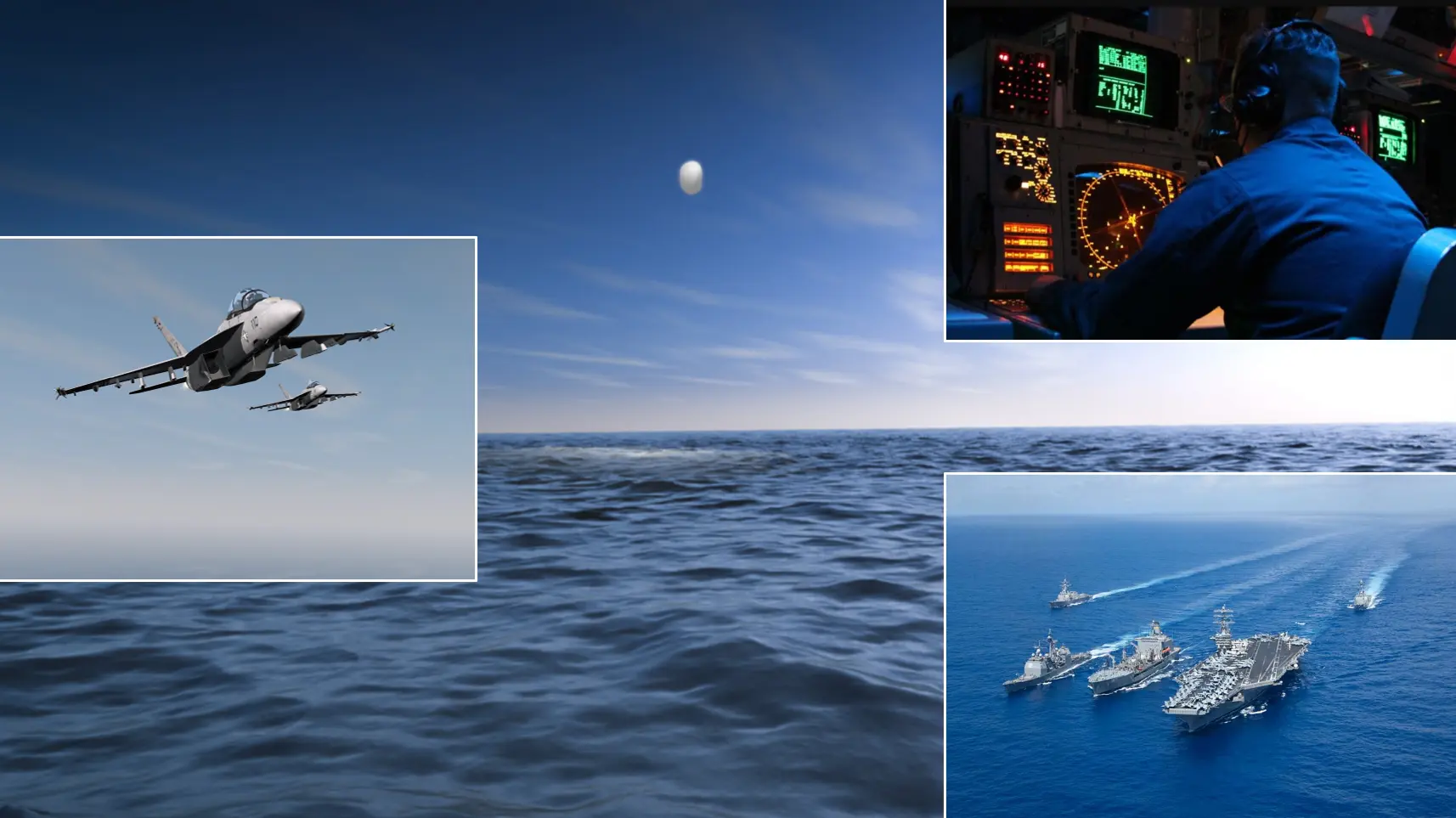

Among UAP researchers, the 2004 "Tic Tac" encounter involving the USS Nimitz Carrier Strike Group is often cited as a gold standard case, since it is one of the few backed by radar tracks, multiple trained eyewitnesses, and infrared video that corroborate each other. Over several days that November, the USS Princeton's SPY-1B radar tracked unidentified contacts off the coast of Southern California. On November 14, two F/A-18F Super Hornet pilots, Commander David Fravor and Lieutenant Alex Dietrich, were sent to investigate one of them, and reported a white, oblong object, roughly the size of their own aircraft, with no wings or visible engines, that mirrored their turns before accelerating out of sight. A second aircraft later filmed the object with its ATFLIR pod, producing the FLIR1 footage the Pentagon declassified in 2020. TUO covered the full background of the case in Part I of our series on the modern UAP movement.
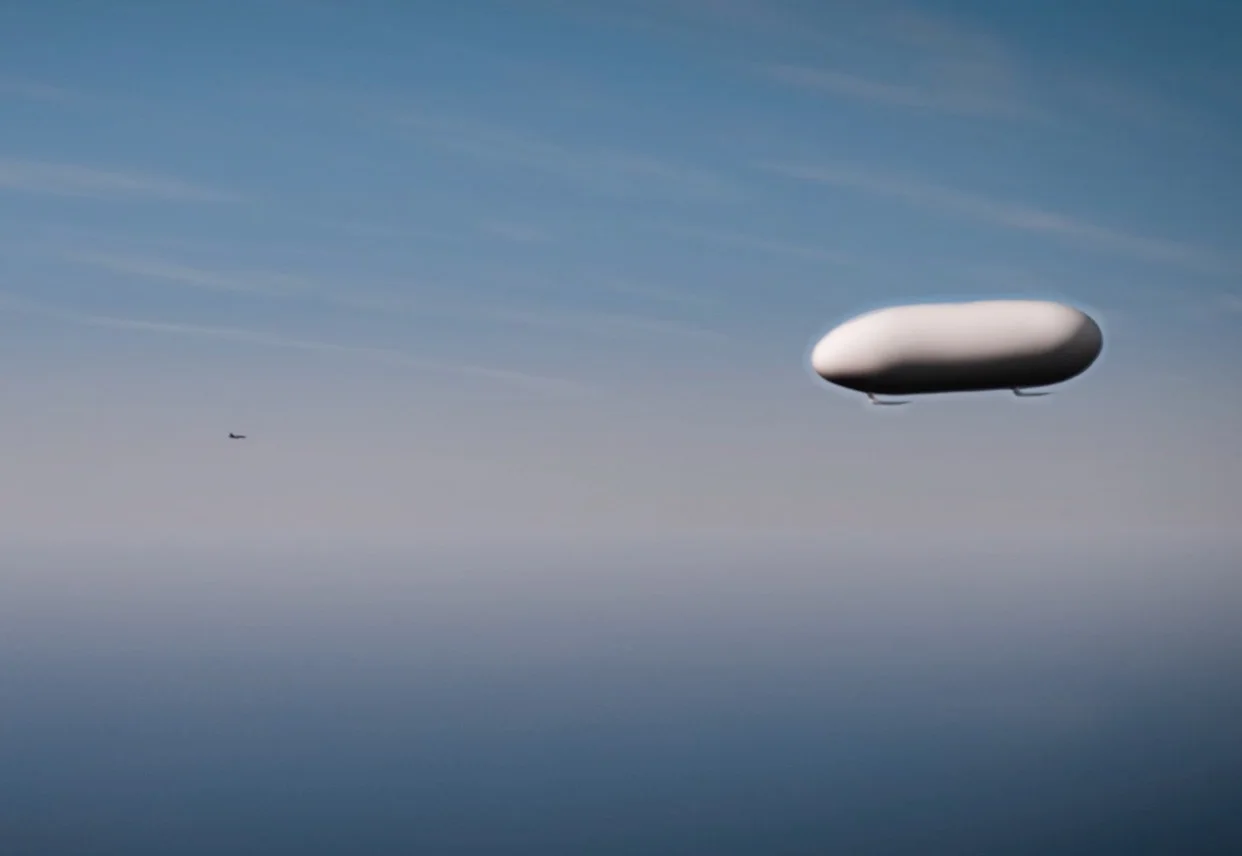
David Beaty first released his acclaimed The Nimitz Encounters in 2018, a documentary combining CGI recreations of the radar tracks and the Fravor-Dietrich intercept with direct witness testimony. An expanded cut followed in August 2019, titled "The Nimitz Encounters: Updated With New Info," and this remains the version published on Beaty's YouTube channel today. He provided TUO access to a screener of the next update, and spoke with us about what has changed.
The current 2019 cut is built around four witnesses: Senior Chief Kevin Day and Petty Officer Gary Voorhis, both of the Princeton's Combat Information Center, and Petty Officer Patrick Hughes and Petty Officer Jason Turner of the Nimitz. Day and Voorhis describe tracking the unidentified contacts on radar for several days before the intercept. Hughes describes what happened afterward: two unidentified men in flight suits, whom he assumed were Air Force based on their insignia, came aboard the Nimitz and took the data recorders from the Hawkeye involved in the intercept. Turner recalls seeing a longer, higher-resolution version of the FLIR footage than what was later made public, while Voorhis says he was made to hand over his own radar and CEC (Cooperative Engagement Capability) recordings before the system was wiped and reloaded.
The new cut builds on this in four main ways. It adds testimony from three previously unheard witnesses, describing what looks like a coordinated data-retrieval operation spanning both ships. It introduces a contested account of how the Navy explained away the radar contacts at the time, along with claims that key logs are missing. It includes a direct, on-camera rebuttal of Commander David Fravor's public statements about the case. And it adds a new angle to the previously reported Silent Hammer connection, raising an open question about a Russian submarine. Beaty also told TUO about a further chapter (not included in the provided screener), examining a Cold War radar-spoofing program.
The three new witnesses are Petty Officer James Hernandez, Petty Officer Ryan Weigelt, and Karson Kammerzell. Hernandez worked in the Nimitz's primary flight control tower. Weigelt was a leading petty officer with a Princeton-based helicopter squadron. Kammerzell served as a cryptologic technician aboard the Princeton. According to Beaty, all three reached out to him first.
Hernandez says he tracked two unidentified men via his squadron's headset network as Nimitz officers escorted them to the hangar bay where the Hornet involved in the intercept was parked. There, he says, the men removed something from the aircraft, placed it in a canvas bag, and were escorted back toward the flight deck and a waiting helicopter.
Weigelt, watching from the Princeton, describes a helicopter landing with its rotors still turning. Two men emerged, he says, wearing dark, unmarked flight suits, one of them carrying a canvas bag. He also says his squadron's own helicopter was taken off-mission that night by men he identified, based on rank insignia, as Air Force personnel. Sensitive equipment was later removed from one of the squadron's aircraft, he adds, leaving it unflyable until the ship returned to port.
Kammerzell says he independently observed the unidentified tracks on the Princeton's SPS-49 air search radar, corroborating the SPY-1B contacts described by Day and Voorhis. He also recalls his division officer being flown to the Nimitz for a debriefing in the days afterward.
Taken together, the three accounts describe a coordinated operation touching at least two ships and multiple data systems on the same day. In his written responses, Beaty pointed to their independence: "None of these men knew each other," he wrote, "so the stories are unique." But he was careful not to overstate the case. He has not been able to corroborate every detail, and the witnesses' descriptions of the men themselves conflict, ranging from plainclothes officials to unmarked flight suits to Air Force-marked flight suits. "It's conjecture at this point," he wrote (see the Q&A below for more on this).
The update also introduces a contested account of how the incident was explained away at the time. According to Kammerzell, his unit received an email over the ship's secure SIPRnet instructing personnel to describe the unidentified contacts as "ice crystals." He also says the cover story given during the Nimitz debriefing was "falling ice," a characterization the Princeton's air boss reportedly dismissed on the spot.
Kammerzell relays a secondhand account from a boatswain's mate, who told him his deck log entry describing an overnight sighting had later been rewritten in someone else's handwriting. Separately, the new cut reveals that the USS Princeton's deck logs from November 2004, along with the Nimitz's flight logs from that period, have been reported missing by the Navy, leaving the FLIR1 footage as the only surviving record.
Beaty described the deck log story as "a third-party account" he has not been able to verify. He called the missing logs "puzzling," while noting that the Navy "often can't find documents."
Elsewhere in the update, Kammerzell directly addresses Commander David Fravor, the Nimitz case's most prominent witness. Fravor has previously stated that, to his knowledge, no one boarded either ship after the encounter and that no NDAs were issued in connection with it. Kammerzell pushes back on this, arguing that Fravor, as a Nimitz pilot, would not have had firsthand knowledge of what happened aboard the Princeton. Beaty told TUO he has not been able to reach Fravor about this and does not know his current position on the claim. This remains an open disagreement between named witnesses, with no independent documentary record to settle it either way.
The update also expands on a connection first raised by The War Zone in 2019: the Silent Hammer exercise, conducted off San Diego from October 4 to 14, 2004, a month before the Nimitz encounter. During the exercise, the USS Georgia, then awaiting conversion to a guided-missile submarine, launched capsules from its missile tubes as a "clandestine sea-base." The film describes Georgia as deploying tube-launched drones, with the Navy, in its own published account, describing the payloads as inert test shapes. Beaty maintains the exercise's intelligence, surveillance, and reconnaissance (ISR) mission remains classified, while agreeing the timeline, a month before the encounter, "doesn't fit at this point."
There's also a new question here: whether the underwater disturbance the Fast Eagle pilots described could instead have been a Russian submarine, an idea Beaty says came from a former senior Navy officer and discusses further in the Q&A below.
Beaty also explores an alternate theory, centered on Thornton "T.D." Barnes, a former CIA officer and Area 51 veteran. In earlier reporting by The War Zone, Barnes drew a parallel between the Nimitz case and Project Palladium, a 1960s CIA program that injected false aircraft tracks into Cuban and Soviet radar. Beaty said Barnes argues that the Princeton's radar contacts could reflect a similar spoofing operation, relayed to other ships and aircraft via the CEC network. Beaty also connects this to NEMESIS, a Navy electronic warfare program reported by The War Zone in 2019 that was designed to project "phantom fleets" of aircraft, ships, and submarines. Beaty stressed this would not explain the visual intercept itself: "We don't have any known aircraft that perform like what Fravor saw, or that look like tic tacs," he wrote, "so none of my presentation explains those encounters."
The following is The UAP Observer's interview with Beaty:
Q: How long have you been working on this new version, and what made you decide to revisit the original film now? Was it new witnesses finding you, or you finding them?
A: Since 2019. I had previously interviewed Karson Kammerzell and Ryan Weigelt, and when I talked to James Hernandez and [T.D.] Barnes, I believed I had enough to create the next iteration of the film. I always said it was a work in progress and not a traditional static piece. When new information came out, a new version would emerge that expanded on the documentation, not replace it. They all reached out to me initially. I have also talked to [three or four] other witnesses who have not come forward. They did not offer any extraordinary new evidence. One man claimed there was an Air Force general on the Nimitz that week. Unconfirmed.
Q: Hernandez, Weigelt, and Kammerzell corroborate data being confiscated from multiple platforms across two different ships, simultaneously. What does the scale of that operation tell you about who was behind it, and how quickly they moved?
A: First off, none of these men knew each other, so the stories are unique. True, they could have learned about the case and tried to "get attention" by adding their own spin to it. I can't 100% corroborate what they saw. For instance, I have not learned the names of the other Pri-Fly [primary flight control] witnesses working with James. But their descriptions of the NDAs, the officials, and what was taken, Voorhis's radar, comms, and CEC, Hughes's flight recorders with radar, comms, CEC, and ESM [Electronic Support Measures], and Hernandez's suggestion of video tapes or other flight data. The possibilities of what they were doing are tracking a UFO with a special rapid-response data retrieval team, or tracking a test with a pre-planned data retrieval team to scrub all evidence of a classified test.
Q: Hernandez says the men who came aboard the Nimitz "didn't look like Air Force," yet others on the Princeton assumed they were Air Force based on the flight suits. Who does he think they were?
A: Several of the descriptions differ. Voorhis, who was in CIC [the Combat Information Center], said they wore plain clothes, not flight suits. He said [government] officials. Weigelt said green flight suits and Air Force. Hughes said Air Force flight suits, based on the insignia. Hernandez said black flight suits, no markings, and "not Air Force." It's conjecture at this point.
Q: Kammerzell describes an email over the SIPRnet calling it "ice crystals," and separately learning the cover story at the Nimitz debriefing was "falling ice." The deck logs were also apparently rewritten. How do you assess the credibility of those accounts, and does the Navy's position on the missing logs surprise you?
A: Kammerzell recalled his division officer leaving to fly to the Nimitz for that meeting quite vividly. He was very detailed in describing it. We know the FLIR1 video was on the CSG's [carrier strike group's] SIPRnet, based on many accounts. Gary said it was deleted soon after. Kevin Day said the Princeton's captain also suggested it was likely falling ice on radar. The deck log story is a third-party account and only anecdotal. It can't be verified at this point, and I have not talked to that individual. The missing logs are puzzling. The Navy often can't find documents. It's not unheard of. What it means is unknown.
Q: Silent Hammer ended on October 14, exactly one month before the encounter, and USS Georgia was testing tube-launched UAVs in the same waters. Are you suggesting the Tic Tac itself could have been a drone from that submarine, or is this an open question?
A: I'm suggesting tube-launched drones were real technology being developed, and that radar spoofing using aerial vehicles was also being developed. Could the SPY-1 Bravo system be spoofed while in a training mode, and could CEC then retransmit those spoofed radar targets to other ships and planes? Most likely yes, based on expert sources, though the details are classified. We don't have any known aircraft that perform like what Fravor saw, or that look like tic tacs, so none of this explains those encounters. Did Fravor stumble onto a covert sub that dove to evade? Possibly. Did Princeton see spoofed radar targets? Possibly.
Q: You also introduce the Russian submarine angle for the first time. What's your evidence that a Russian sub was operating in the area that week, and how seriously do you take it as an explanation for the ocean disturbance?
A: In discussions with a former high-ranking Navy officer and fighter pilot, he raised the idea that the Navy was often perplexed by Russian submarines that evaded detection after leaving port for unknown patrol destinations. He also mentioned the Russians' strong interest in the new Aegis ballistic missile defense capability and the SM-3 missile, and thought it more likely to be a Russian sub. The distances involved for that kind of patrol by an Oscar-class submarine are questionable, but not impossible. Going undetected off SOCAL [the Navy's Southern California operating area] is also highly questionable.
Beaty's updated cut sticks to testimony rather than trying to present definitive conclusions. In his own words: "My goal in presenting possible theories is not to explain away the mystery, but to offer critical analysis with known programs that might offer some answers to the observed incidents."
More than two decades on, the Tic Tac encounter keeps raising new questions rather than answers, including a recent, unrelated claim that the object itself was a secret Lockheed Martin platform, pushed by figures like Representative Eric Burlison and NewsNation's Ross Coulthart, but directly denied by Fravor.
The film's own closing narration captures that posture well: whatever was operating off the California coast that week remains beyond the horizon of what we currently understand.
The Nimitz Encounters is a project of Cinegraphic Productions, David Beaty's Florida-based production company. The currently published cut is available on YouTube.